The Architecture of Instant Insight
Real-time market data is no longer just a ticker tape of prices. In 2026, it is a multi-dimensional stream encompassing order book depth, social sentiment, macroeconomic shifts, and cross-asset correlations. "Real-time" in this context refers to a latency window—the time between an event occurring on an exchange and its arrival in your analytical environment—that ranges from microseconds for high-frequency traders to a few seconds for portfolio managers.
Consider a practical scenario: a sudden geopolitical shift in the Middle East. Within milliseconds, oil futures react. Seconds later, airline stocks and logistics REITs follow. An analyst using a "near-real-time" tool with a 15-minute delay (common in free tiers) is essentially trading on history. True analytical tools bypass this by utilizing direct exchange feeds or high-throughput APIs that refresh sub-second, often incorporating AI-driven "agentic" models that suggest trades before the manual user even spots the trend.
Recent industry data from early 2026 indicates that firms utilizing automated, real-time data management platforms have seen a 224% ROI over a three-year period. This isn't just about speed; it is about "operational capacity"—reducing the time spent on manual data reconciliation by up to 50%, allowing human experts to focus on strategy rather than cleaning spreadsheets.
Identifying the Latency Trap: Why Standard Dashboards Fail
The most common mistake in market analysis is the "Static Dashboard Syndrome." Many teams invest in high-end visualization software but feed it through "delayed" or "polled" data sources.
-
The Problem of Polling: Traditional web-based tools often "poll" a server every 30 to 60 seconds. In a volatile market, a 60-second window can see a price move of 2–3%, triggering stop-losses or missing entry points entirely.
-
Data Fragmentation: Using one tool for equities, another for crypto, and a third for macro data leads to "siloed" analysis. By the time an analyst reconciles these three sources, the opportunity has evaporated.
-
The Cost of "Dirty" Data: Real-time streams are prone to "spikes" or "bad ticks." Without an analytical tool that includes an automated cleaning layer (like Refinitiv’s or Bloomberg’s proprietary algorithms), your automated systems might execute orders based on a glitch.
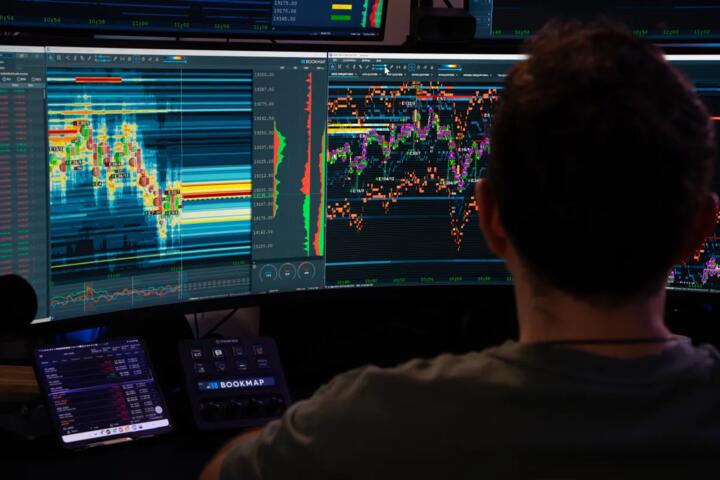
A real-world example of this failure occurred in late 2025 during a localized "flash crash" in certain tech ETFs. Retail-grade tools showed a price drop but failed to show the widening bid-ask spread. Institutional traders with depth-of-book tools saw the liquidity evaporating and pulled back, while those relying on top-of-book data were "picked off" by high-frequency algorithms.
High-Performance Solutions: Choosing Your Intelligence Stack
To build a resilient strategy, you must match your tool to your "execution horizon." Here is how professional-grade tools solve the latency and depth problems.
Institutional Terminals: The Gold Standard
For those where cost is secondary to depth, the classic terminals remain the backbone.
-
The Bloomberg Terminal: Still the industry leader with a price tag of roughly $32,000 per year in 2026. It excels because of its "all-in-one" ecosystem—news, chat, and cross-asset data are inseparable.
-
FactSet: Often preferred by buy-side analysts for its superior Excel integration and deeper fundamental data sets. It has recently integrated Agentic AI frameworks that allow users to query complex "what-if" scenarios using natural language.
Developer-First APIs: For Custom Algorithmic Power
If you are building proprietary models, you need raw data, not a GUI.
-
Alpha Vantage: A standout for its balance of historical depth and sub-second real-time feeds. It is highly favored by quantitative developers for its stable schema and global equity coverage.
-
Polygon.io: Known for its low-latency WebSockets. Unlike REST APIs that you "ask" for data, WebSockets "push" data to you the millisecond it changes. For intraday trading tools, this is non-negotiable.
-
Financial Modeling Prep (FMP): Excellent for those needing a mix of real-time price action and deep fundamental "moat" analysis, such as SEC filings and earnings call sentiment.
Why This Works
These tools work because they shift the burden of "cleaning" and "transporting" data from your local machine to their massive server farms. By the time the data reaches your screen, it has been checked for accuracy, adjusted for corporate actions (splits/dividends), and formatted for instant ingestion.
Implementation Case Studies
Case 1: Mid-Sized Hedge Fund (Asset Management)
-
The Problem: The fund was using a mix of Yahoo Finance (for quick checks) and a legacy reporting tool. Their "time-to-decision" after a news break was roughly 12 minutes.
-
The Solution: They migrated to a combined stack of Koyfin for visualization and Alpha Vantage for their custom risk-assessment bots.
-
The Result: Time-to-decision dropped to under 45 seconds. They successfully hedged a sudden 5% downturn in the semiconductor sector in January 2026, saving an estimated $1.4 million in potential drawdown.
Case 2: Fintech Startup (User Experience)
-
The Problem: A trading app was receiving complaints about "stale" prices compared to major exchanges.
-
The Solution: Integrated Polygon.io’s WebSocket feed to provide live, flickering price updates.
-
The Result: User retention increased by 30%, and the "slippage" reported by users (the difference between expected price and execution price) dropped by 18%.
Tool Comparison Matrix: Finding Your Fit
| Feature | Institutional Terminal | Developer API | Web-Based Pro Platform |
| Primary Tool | Bloomberg / FactSet | Polygon.io / Alpha Vantage | Koyfin / TradingView |
| Best For | Multi-asset, News-heavy | Algorithmic / Automation | Charting / Visual Analysis |
| Latency | Extremely Low (ms) | Ultra-Low (µs/ms) | Low (s) |
| Annual Cost | $12,000 - $32,000 | $500 - $5,000 | $300 - $1,200 |
| Setup Time | Weeks (Training needed) | Days (Coding needed) | Minutes (Plug & Play) |
Strategic Pitfalls to Avoid
-
Over-subscribing: Don't pay for a $30k terminal if you only trade US Equities. A specialized API like Intrinio or a platform like Koyfin offers 80% of the functionality for 5% of the cost.
-
Ignoring "Alternative" Data: In 2026, price isn't enough. Tools that don't offer sentiment analysis (like AlphaSense) or supply chain tracking miss the "why" behind the "what."
-
Neglecting T+1 Settlement Readiness: With global markets moving toward faster settlement, ensure your analytical tool tracks "settlement risk" and liquidity in real-time.
FAQ
1. Is "Real-Time" data really necessary for long-term investors?
Yes. Even if you hold for years, your entry and exit points determine your CAGR. Buying a position during a high-volatility "spike" because of a 15-minute data delay can erode months of gains.
2. What is the most cost-effective tool for a professional individual?
Koyfin is currently the best "Bloomberg Lite." It provides institutional-grade graphing and data coverage for a fraction of the cost, making it ideal for sophisticated individual traders.
3. How do I know if an API is truly "Real-Time"?
Check the documentation for "SIP" (Securities Information Processor) vs. "Proprietary" feeds. SIP is the consolidated national feed; proprietary feeds (like those from NASDAQ) are often faster but more expensive.
4. Can AI replace these analytical tools?
AI is a feature of these tools, not a replacement. An LLM cannot "see" the market without a data feed. Look for tools that offer AI-ready data delivery (like LSEG’s Databricks integration).
5. Why are some "Real-Time" prices different across platforms?
This is usually due to "partial" data. Some free tools only show data from one exchange (like IEX), while pro tools aggregate data from all major exchanges (NYSE, NASDAQ, etc.) for a "National Best Bid and Offer" (NBBO).
Author’s Insight
In my fifteen years of navigating capital markets, I have seen more money lost to "cheap data" than to "bad strategy." Many professionals treat data subscriptions as an expense to be minimized, but in reality, your data feed is your primary infrastructure. If I were starting a desk today, I would prioritize a high-speed WebSocket API over a flashy terminal. The future of the market isn't in looking at a screen; it's in building systems that react while the rest of the world is still reading the headline.
Conclusion
The evolution of market intelligence in 2026 has made high-fidelity data more accessible than ever, yet the gap between "information" and "insight" remains wide. To stay competitive, you must move beyond static dashboards and embrace a stack that offers sub-second latency, cross-asset correlation, and AI-assisted interpretation. Start by auditing your current data lag; if your tools aren't updating at the speed of the exchange, you aren't trading the current market—you're trading a ghost of it. Focus on tools like Polygon.io for raw speed or FactSet for deep analysis, and ensure your "time-to-insight" is measured in seconds, not minutes.