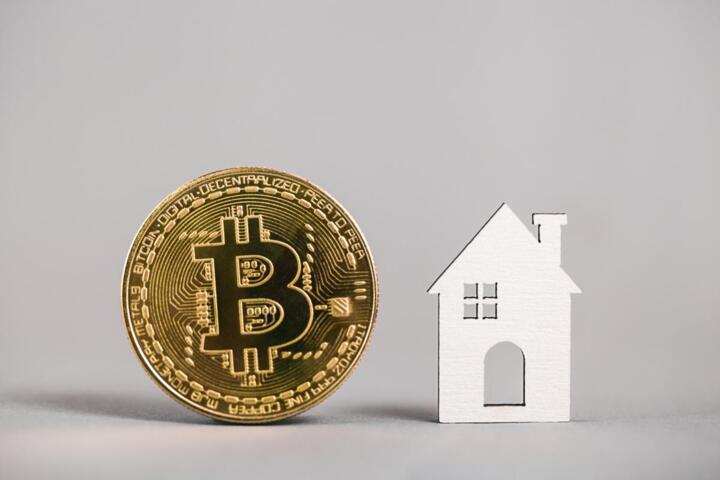
Demystifying Digital Ownership in Global Property Markets
The concept of fractionalizing property via decentralized ledgers involves creating a digital representation of an underlying real estate asset—often a Special Purpose Vehicle (SPV) that owns the deed. Instead of buying a whole apartment building in London or a warehouse in Chicago, an investor buys a "token" representing a share of the income and equity.
In practice, this looks like the St. Regis Aspen Resort project. In 2018, $18 million was raised by selling digital "Aspen Coins," representing indirect ownership in the luxury hotel. This wasn't a futuristic experiment; it was a regulated Regulation D offering that allowed investors to hold a piece of a world-class asset with much lower entry barriers than traditional private equity real estate funds.
The growth is backed by hard data. According to a Boston Consulting Group (BCG) report, the total volume of tokenized illiquid assets is projected to reach $16.1 trillion by 2030. In the real estate sector specifically, platforms like RealT have already tokenized over 400 properties, distributing millions in rental income via stablecoins to global holders every week.
Critical Friction Points in Traditional Real Estate Investing
Many investors approach property with an outdated mindset, leading to three primary "pain points" that digital transformation aims to solve. The first is capital lock-up. Traditionally, if you invest $500,000 in a commercial plaza, that money is "dead" for 5 to 10 years. If you need liquidity for an emergency, you are forced to sell the entire stake, often at a steep discount, in a process that takes months.
Second is the geographic silo effect. An investor in Tokyo might want exposure to Austin, Texas, residential markets due to tech growth, but the legal, tax, and management hurdles of cross-border ownership are prohibitive. This leads to poorly diversified portfolios where investors are over-exposed to their local economy.
Finally, the intermediary tax is a silent killer of returns. Between title companies, escrow agents, manual underwriters, and brokers, transaction costs can eat 5% to 10% of the asset value before a single dollar of rent is collected. In a high-interest-rate environment, these "soft costs" turn a 7% cap rate into a mediocre 4% net return.
Strategic Framework for High-Yield Digital Participation
To navigate this space effectively, you must move beyond the "crypto" hype and focus on the legal-technical bridge. This is not about buying "magic internet money"; it is about programmatic compliance.
Prioritize Regulatory-Compliant Platforms
Only use platforms that utilize Know Your Customer (KYC) and Anti-Money Laundering (AML) protocols integrated directly into the smart contract. This ensures that the tokens cannot be transferred to unverified wallets, protecting the legal integrity of the SPV.
-
Service Recommendation: Republic Real Estate and Lofty.ai are leaders in the US market, while Blocksquare provides infrastructure for European assets.
-
Why it works: It keeps the asset within the bounds of securities law (like SEC Reg D or Reg S), making the digital tokens legally enforceable in a court of law.
Analyze the "Oracle" Reliability
The most critical technical component is the "Oracle"—the data feed that brings off-chain information (like property valuation and occupancy) onto the blockchain.
-
Method: Verify if the platform uses reputable third-party appraisers like CBRE or JLL to update the Net Asset Value (NAV) of the tokens.
-
Result: Reliable data prevents "stale pricing," allowing you to trade your shares on secondary markets like tZERO or Levana at a fair market price.
Automate Yield Reinvestment
One of the most powerful features of digital property is the ability to receive rent daily or weekly rather than monthly.
-
Action: Use platforms that pay out in USDC or USDT. You can immediately redirect these micro-payments into a decentralized finance (DeFi) lending protocol like Aave to earn an additional 4% to 8% APY on your rental income while it sits idle.
-
Data Point: This compounding effect can increase an investor’s Internal Rate of Return (IRR) by 120 to 150 basis points over a 5-year horizon compared to traditional monthly bank transfers.
Real-World Case Studies in Digital Transformation
Case 1: The Olayan Group & Goldman Sachs
Organization: The Olayan Group (partnering with major financial institutions).
Problem: Managing the debt stack and equity distribution for a massive $1 billion+ commercial portfolio was administratively heavy and lacked transparency for stakeholders.
Action: They utilized a private ledger system to track interests in the Sony Building in New York. By digitizing the ownership tiers, they streamlined the distribution of dividends.
Result: Administrative overhead related to investor reporting and distributions was reduced by an estimated 30%, with near-instantaneous settlement of internal transfers.
Case 2: Residential Scaling via Lofty.ai
Platform: Lofty.ai (Algorand-based).
Problem: A retail investor with only $5,000 wanted to diversify across five different US states to hedge against local economic downturns.
Action: The investor purchased $1,000 "tokens" in five different single-family rentals (SFRs) in Ohio, Florida, Mississippi, Illinois, and Arizona.
Result: The investor achieved a diversified 7.2% average net yield. Because these are "liquid" tokens, the investor sold their Florida stake in under 15 minutes on the secondary market when they anticipated a hurricane-related insurance spike, a feat impossible in traditional real estate.
Comparative Analysis: Traditional vs. Tokenized Investing
| Feature | Traditional Real Estate | Tokenized Real Estate |
| Minimum Investment | $50,000 - $100,000+ | $50 - $1,000 |
| Liquidity | Low (Months/Years) | High (Secondary Markets) |
| Transaction Costs | 5% - 10% | < 1% |
| Transparency | Private/Opaque | Public Ledger/Audit Trails |
| Compliance | Manual/Paper-based | Programmatic/Smart Contract |
| Settlement Time | 30 - 60 Days | Minutes to Hours |
Common Pitfalls and Risk Mitigation
The most frequent mistake is ignoring the Underlying Asset Quality. Investors get blinded by the "blockchain" aspect and forget they are buying a building. If a property is located in a declining neighborhood with a 20% vacancy rate, tokenizing it doesn't make it a good investment. Always perform traditional due diligence on the "brick and mortar" before looking at the digital stack.
Another error is failing to account for Smart Contract Risk. Even a legally sound property can be compromised if the platform’s code is buggy.
-
Prevention: Only invest through platforms that have had their smart contracts audited by firms like CertiK or Quantstamp.
-
Tax Strategy: Ensure the platform provides a Schedule K-1 (for US investors) or an equivalent tax summary. Many automated platforms now integrate with TaxBit or CoinTracker to make year-end reporting seamless.
FAQ
Can I lose my property rights if I lose my private key?
Most regulated platforms use a "permissioned" ledger. If you lose your wallet access, the issuer (the SPV) can burn your old tokens and re-issue new ones to a verified wallet after a manual identity verification. This is a major safety net compared to standard cryptocurrencies.
How is the rent actually paid?
Property management firms collect rent in fiat currency, which the tokenization platform then converts into stablecoins. These are distributed pro-rata to token holders' wallets via a smart contract, usually on a weekly or monthly schedule.
Who manages the physical building?
Token holders do not usually manage the property. A professional third-party management company (e.g., Greystar) is hired by the SPV. The cost of this management is deducted before the net rental yield is distributed to you.
Is this legal in the United States?
Yes, provided the offering follows SEC regulations. Most "public" tokenized offerings use Regulation A+ (allowing non-accredited investors) or Regulation D (for accredited investors).
What happens if the tokenization platform goes bankrupt?
Since the property is held in a stand-alone SPV (usually an LLC), the assets are "bankruptcy remote" from the platform itself. The deed is a legal document filed with the local county, and the token holders remain the beneficial owners of that LLC.
Author’s Insight
Having tracked the intersection of prop-tech and finance for over a decade, I’ve seen many "revolutions" fail. However, real estate tokenization is different because it solves the fundamental problem of Capital Velocity. In my experience, the real "alpha" isn't just in the 7% yield; it's in the ability to use your property tokens as collateral. We are entering an era where you can hold $100,000 in Dallas apartments and instantly take a low-interest loan against those tokens to fund a business venture, all without a bank's 30-day approval process. My advice: start small, prioritize "Security Token" (STO) compliant projects, and treat the blockchain as nothing more than a more efficient accounting ledger.
Conclusion
Real estate tokenization is no longer a fringe concept; it is the natural evolution of the REIT. By lowering entry barriers, providing genuine liquidity, and automating the distribution of yields, it offers a level of portfolio agility previously reserved for the ultra-wealthy. To succeed, investors should focus on platforms with rigorous third-party audits, clear legal structures via SPVs, and high-quality underlying assets. The transition from paper deeds to digital tokens is inevitable—those who master the mechanics of this shift today will be best positioned to capture the efficiency premium of the modern property market.