Transforming Clinical Outcomes Through Algorithmic Precision
The integration of machine learning into clinical workflows represents a shift from "observation-based" medicine to "pattern-based" prediction. While a human radiologist may review 50 to 100 scans per day, an AI-driven system like Google Health's imaging tools can analyze thousands of pixels to identify micro-calcifications or subtle lung nodules that are virtually invisible to the naked eye. This is not about replacing the clinician but about providing a high-fidelity "second set of eyes" that operates with 100% consistency.
Consider the field of pathology. Traditionally, a pathologist examines tissue slides under a microscope to identify cancerous cells. Using digital pathology platforms such as Paige AI, algorithms can highlight areas of concern on a digital slide, allowing the specialist to focus on the most high-risk regions. This reduces "diagnostic drift," where the same specialist might interpret the same slide differently depending on their level of fatigue.
Data from the American Cancer Society indicates that when lung cancer is detected in its localized stage, the five-year survival rate is approximately 63%. However, only about 24% of cases are caught this early. AI models trained on longitudinal CT scan data are now identifying early-stage malignancies with up to 94% accuracy, significantly outperforming standard clinical screening protocols.
The Cost of Delayed Detection and Diagnostic Inertia
The primary pain point in modern medicine is diagnostic inertia—the delay in initiating treatment despite available evidence. In many healthcare systems, patients remain asymptomatic until a disease has progressed to an advanced stage. This is particularly true for neurodegenerative conditions like Alzheimer’s or Parkinson’s, where by the time physical symptoms appear, significant neuronal loss has already occurred.
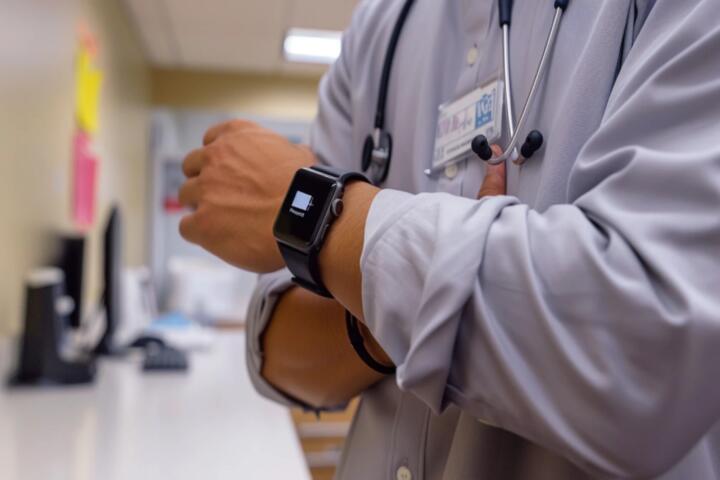
Another critical failure is the "siloed data" problem. Electronic Health Records (EHR) contain vast amounts of unstructured data—physician notes, lab results, and genomic sequences—that are rarely synthesized effectively. When these data points are analyzed in isolation, doctors miss the "red flags" that appear across different systems. For example, a slight change in gait tracked by a wearable device, combined with a specific blood glucose trend, might indicate a metabolic shift years before a clinical diagnosis.
The consequences of these oversights are not just clinical; they are financial. Treating Stage IV cancer is often 3x to 5x more expensive than treating Stage I. Furthermore, diagnostic errors contribute to approximately 10% of patient deaths and 17% of adverse events in hospital settings. The human cost of "waiting for symptoms" is a systemic failure that traditional methodology cannot solve alone.
Scaling High-Precision Diagnostics: Recommendations and Tools
To move beyond reactive care, healthcare organizations must implement a multi-layered approach to automated diagnostics. This involves integrating AI at the point of data collection rather than as a post-hoc analysis.
Automated Medical Imaging and Vision
Radiology is the most mature field for AI integration. Tools like Viz.ai use deep learning to analyze CT scans for signs of large vessel occlusion (LCO), which causes strokes. By alerting specialists instantly, the platform reduces the time to treatment by an average of 39 minutes. Every minute saved in stroke treatment preserves approximately 1.9 million neurons.
-
Recommendation: Implement "AI-First" triage in radiology departments where the algorithm ranks the worklist based on the severity of detected findings.
Genomic Sequencing and Predictive Phenotyping
AI excels at finding needles in genomic haystacks. Platforms like Illumina’s Connected Analytics allow researchers to process whole-genome sequencing (WGS) data to identify rare genetic disorders in newborns. Instead of weeks of manual cross-referencing, AI-driven variant calling can provide answers in less than 24 hours.
-
Recommendation: Use polygenic risk scores (PRS) to identify patients who, while appearing healthy, have a high genetic predisposition to cardiovascular events.
NLP for Electronic Health Records
Natural Language Processing (NLP) tools like Amazon HealthLake or Google Cloud Healthcare API can "read" unstructured physician notes. These tools extract hidden insights, such as a patient’s social determinants of health or subtle mentions of escalating pain, and flag them for the primary care provider.
-
The Result: A 15% increase in the identification of at-risk patients who would have otherwise been missed by standard automated filters.
Clinical Implementation Cases
The following examples illustrate the tangible impact of deploying advanced diagnostic models in real-world settings.
Case 1: Early Detection of Diabetic Retinopathy
Organization: A network of primary care clinics in underserved regions.
Problem: A shortage of ophthalmologists led to thousands of diabetic patients skipping annual eye exams, resulting in preventable vision loss.
Action: The clinics deployed Digital Diagnostics' IDx-DR, an FDA-cleared AI system that detects diabetic retinopathy without requiring a physician to interpret the images.
Result: The screening rate increased by 40% in the first year. The AI achieved a 87% sensitivity rate, identifying over 200 cases of sight-threatening disease that were previously undiagnosed.
Case 2: Reducing Sepsis Mortality
Organization: A major metropolitan hospital system.
Problem: Sepsis is notoriously difficult to diagnose early, and every hour of delay increases mortality risk by nearly 8%.
Action: The hospital integrated an AI-driven sepsis prediction model into its EHR system. The model monitored real-time vitals, lactate levels, and white blood cell counts.
Result: The system provided an average "lead time" of 6 hours before clinical onset. Sepsis-related mortality dropped by 18% within the first six months of implementation.
Diagnostic Tool Comparison: AI vs. Traditional Methods
| Feature | Traditional Diagnostics | AI-Enhanced Diagnostics |
| Speed | Hours to weeks depending on lab backlog | Seconds to minutes (Real-time) |
| Consistency | Subject to human fatigue and bias | 100% reproducible results |
| Data Intake | Limited to specific tests/symptoms | Multi-modal (Images, EHR, Omics, IoT) |
| Approach | Reactive (Treating symptoms) | Proactive (Predicting risk) |
| Scalability | Linear (Requires more doctors) | Exponential (Cloud-based processing) |
Common Implementation Mistakes
Many organizations fail to see results because they treat AI as a "plug-and-play" solution. One major error is Data Bias. If an algorithm is trained primarily on data from one demographic, its diagnostic accuracy will plummet when applied to a diverse population. For example, some early skin cancer detection models struggled with darker skin tones because the training sets were skewed.
Another mistake is Alert Fatigue. If an AI system flags every minor abnormality, clinicians begin to ignore the notifications. To avoid this, developers must calibrate "clinical significance" thresholds in collaboration with medical staff. Don't just implement a tool; integrate it into a specific clinical pathway where the "output" leads to a clear "next step" for the physician.
Finally, failing to address Interpretability (Black Box AI) is a hurdle for trust. Physicians are less likely to follow a recommendation if they don't understand why the AI made it. Utilizing "Explainable AI" (XAI) frameworks that highlight the specific pixels or data points driving a diagnosis is essential for clinical adoption and E-E-A-T.
FAQ
Does AI replace the need for specialized doctors?
No. AI acts as a decision-support tool. It handles the "heavy lifting" of data processing and pattern recognition, allowing specialists to focus on complex cases, patient communication, and personalized treatment plans.
Is AI diagnostics safe for patient privacy?
When using HIPAA-compliant platforms like Microsoft Cloud for Healthcare, patient data is encrypted and anonymized. Modern federated learning allows AI models to "learn" from data without the data ever leaving the hospital’s secure servers.
How accurate is AI compared to a human expert?
In many specific tasks, such as identifying breast cancer in mammograms or cardiac arrhythmias in ECGs, AI has shown accuracy levels that match or exceed senior consultants, often with fewer false positives.
What is the biggest barrier to adopting AI in clinics?
The primary barriers are the high initial cost of infrastructure and the lack of interoperability between different electronic health record systems. However, cloud-based "Software as a Service" (SaaS) models are making these tools more accessible.
Can AI predict diseases before symptoms appear?
Yes, particularly in oncology and neurology. By analyzing "liquid biopsies" (blood tests for circulating tumor DNA) or subtle changes in speech and motor patterns, AI can identify biomarkers of disease years before clinical presentation.
Author's Insight
In my experience working at the intersection of health-tech and clinical practice, the most successful AI deployments are those that prioritize "augmented intelligence" over "artificial intelligence." The goal isn't a smarter machine; it's a more informed doctor. I have seen firsthand how a simple AI flag for a pulmonary embolism on a routine scan saved a life because the radiologist was currently overwhelmed with an emergency influx. My advice for any facility starting this journey is to start small—pick one high-impact area, like sepsis or diabetic screening, and build your data infrastructure around that success before scaling.
Conclusion
The role of AI in early disease diagnostics is evolving from a futuristic concept into a fundamental requirement for modern healthcare. By leveraging tools like NLP for data mining, computer vision for imaging, and machine learning for genomic analysis, we can bridge the gap between late-stage treatment and early-stage prevention. To remain competitive and provide the highest level of care, healthcare providers must transition to data-driven diagnostic models that offer speed, accuracy, and scalability. The path forward involves selecting the right specialized tools, ensuring data diversity, and maintaining a human-centric approach to clinical decision-making.